

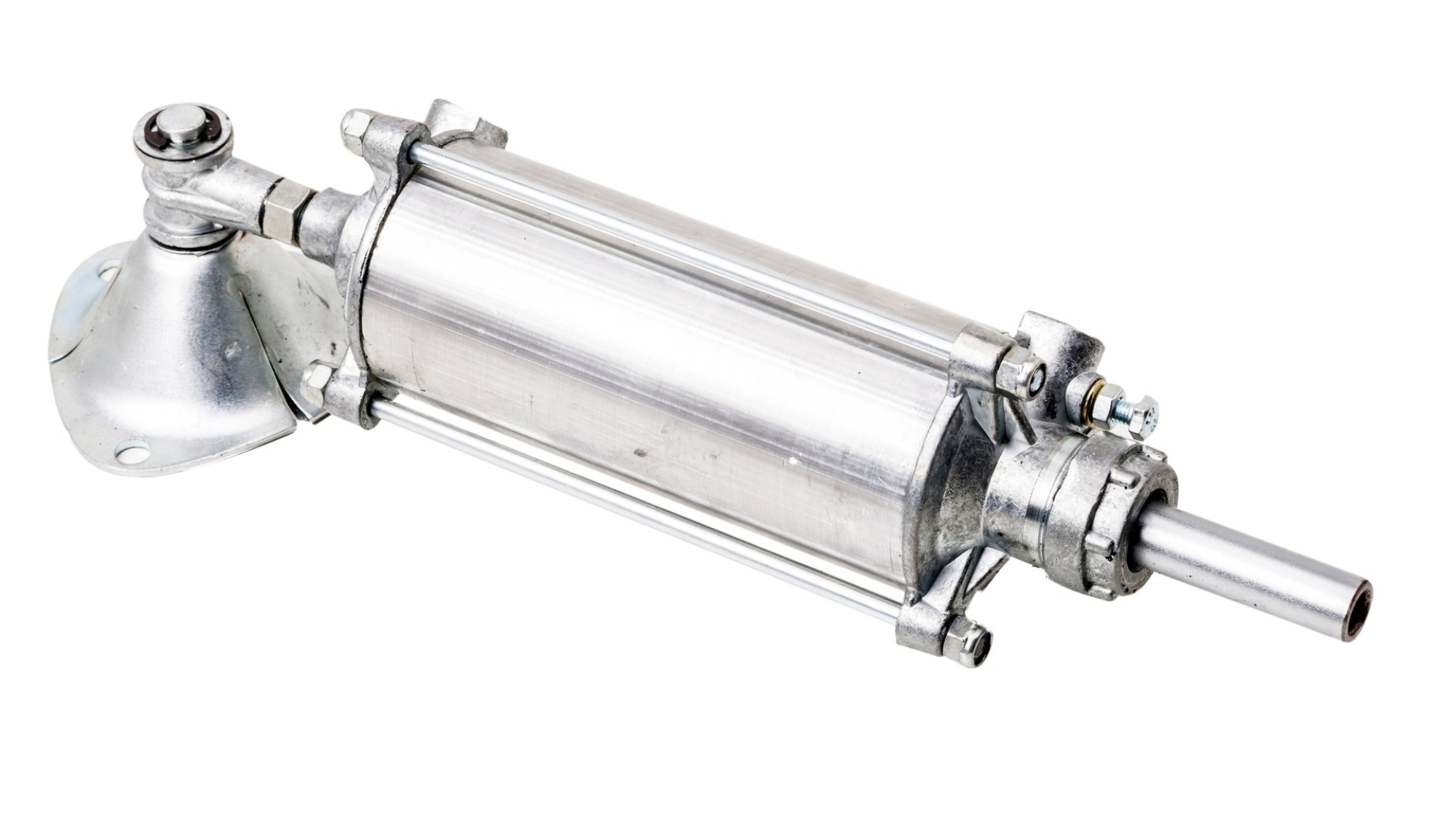
Single and Double-Acting Hydraulic Cylinders: Key Differences and How to Choose
Every hydraulic system relies on a cylinder to convert pressurized fluid into linear motion, but not every cylinder does it the same way. Single and double acting cylinders represent the two fundamental designs used across nearly every hydraulic application, from simple lifting equipment to complex construction machinery. Understanding the key differences between these two types of hydraulic cylinders helps you choose the right cylinder for your specific needs, whether you’re specifying a new build or replacing an existing unit.
At Carlson Hydraulics, we’ve manufactured welded hydraulic cylinders in Wichita, Kansas since 1953. Our experience building both single and double acting cylinders for agriculture, construction, and industrial applications gives us a practical perspective on how each type performs in the field.
Understanding the two types of Hydraulic Cylinder
A hydraulic cylinder uses pressurized hydraulic fluid to move a piston inside a sealed barrel, and that piston movement generates the force needed to push, pull, lift, or lower a load. The fundamental difference between the two main types of hydraulic cylinders comes down to how fluid enters the cylinder and how many directions that fluid can power.
Single and double acting cylinders each solve this problem differently. A single-acting cylinder uses hydraulic pressure to move the piston in one direction only, while a double-acting cylinder uses pressurized fluid to move the piston in both directions. This distinction affects everything from the number of ports on the cylinder to the type of cylinder an application actually requires.
What Is a Single-Acting Hydraulic Cylinder?
A single-acting cylinder is a hydraulic cylinder that produces force in one direction using hydraulic fluid, then relies on gravity, a return spring, or another external force to bring the piston back to its original position. Because a single-acting cylinder only needs to power motion in one direction, the design is simpler and uses fewer components than a double-acting design.
How Single-Acting Cylinders Work
A single-acting hydraulic cylinder has one pressure port located at one end of the cylinder barrel. In some designs, a second port may be present, but it is typically fitted with a breather and is not used as a pressure port. When the system pressurizes hydraulic fluid into that single port, the fluid pushes against the piston and extends the piston rod, generating force in one direction. Once the load is removed or system pressure is released, the piston retracts on its own, either pulled back by gravity acting on the load or pushed back by an external spring built into the cylinder.
Because force is only needed in one direction for many applications, single-acting cylinders are mostly used in lighter-duty scenarios like light assembly equipment, lift gates, and dump mechanisms where gravity naturally returns the piston once the lifting force is removed.
What Is a Double-Acting Hydraulic Cylinder?
A double-acting cylinder is a hydraulic cylinder built with a port at each end of the barrel, allowing hydraulic pressure to move the piston in two directions. This design gives a double acting cylinder precise control over both extension and retraction, rather than relying on gravity or a spring to complete the cycle.
How Double-Acting Cylinders Work
With two ports positioned at opposite ends of the barrel, a double-acting hydraulic cylinder can direct fluid to either side of the piston. Pressurized fluid entering the port at the cap end pushes the piston forward, extending the rod. To retract the piston rod, the system directs fluid to the port at the rod end while allowing fluid on the opposite side to flow out through a valve. This ability to send fluid to both sides of the piston is what gives double-acting cylinders controlled extension and retraction in both directions, rather than force in only one direction.
This two-port design functions as a true actuator capable of extending and retracting the piston under power the entire time, which is why double acting cylinders are the standard choice for equipment requiring repeatable, high-pressure performance in both directions.
Single Acting vs. Double Acting Cylinder: Key Differences
Once you understand the key differences in how each design moves fluid, choosing between single and double acting cylinders becomes much more straightforward.
Construction and Port Differences
The most visible difference between a single-acting cylinder and a double-acting cylinder is the number of ports. A single-acting cylinder has one port and moves the piston using hydraulic pressure in one direction only. A double-acting cylinder has two ports, one at each end, and moves the piston in both directions using pressurized fluid on either side.
Force, Control, and Application Fit
When you compare single-acting and double-acting designs side by side, the difference between single-direction force and two-directional control shapes which applications each one fits best. Single-acting cylinders are used when force is required in one direction only, such as dump beds or simple lifting mechanisms.
Double-acting cylinders, by contrast, are built for applications that require precise control in both directions. Construction equipment, manufacturing machinery, and presses that clamp, open, and close all depend on double action to control both the working stroke and the return stroke. Any application where the opening and closing of a mechanism must be controlled rather than left to gravity is typically better served by a double-acting cylinder.
Choosing the Right Cylinder for Your Application
Understanding which type of cylinder your equipment needs starts with asking a simple question: does the application require force in one direction, or force in both directions?
When a Single Acting Cylinder Makes Sense
A single-acting hydraulic cylinder tends to be the better choice when the load itself, gravity, or an external spring can safely and reliably return the piston without powered assistance. Dump trailers, some lift gates, and simple presses are common examples where single-acting design keeps the system simple without sacrificing performance.
When a Double-Acting Cylinder Makes Sense
Applications that need controlled movement in two directions, rather than relying on an outside force to return the piston, call for a double-acting hydraulic cylinder. Excavator arms, loader buckets, and press equipment all fall into this category, since each one needs powered control extending and retracting under load.
If you’re still working through single acting and double acting cylinder options for a specific piece of equipment, our team can walk through your application’s requirements and help you land on the right cylinder for the job.
Welded Construction in Single- and Double-Acting Cylinders
Regardless of whether an application calls for single acting or double acting cylinders, the underlying cylinder construction still matters for long-term performance. At Carlson Hydraulics, every cylinder we build, single or double acting, uses all-welded construction rather than a tie-rod design, with the end cap welded directly to the barrel rather than assembled with tie rods.
Every cylinder we manufacture is tested with hydraulic fluid on our test bench to verify performance at its rated pressure before it ships. All Carlson Hydraulics cylinders, whether built as a single-acting cylinder or a double-acting cylinder, are backed by our 2-year limited warranty covering manufacturing defects.
Custom Single- and Double-Acting Cylinders at Carlson Hydraulics
Whether your equipment calls for a single-acting cylinder built for simplicity or a double-acting cylinder engineered for precise control in both directions, Carlson Hydraulics has manufactured welded hydraulic cylinders in Wichita, Kansas since 1953. Our custom hydraulic cylinder manufacturing process covers both single and double acting cylinders, built to the exact bore, stroke, and mounting specifications your application demands. For heavier applications requiring maximum force in both directions, our heavy-duty welded cylinders are engineered specifically for double-acting performance under extreme pressure.
Ready to determine which type of cylinder your application needs? Contact Carlson Hydraulics today, and our team will help you specify the right single or double acting cylinder for your equipment.