

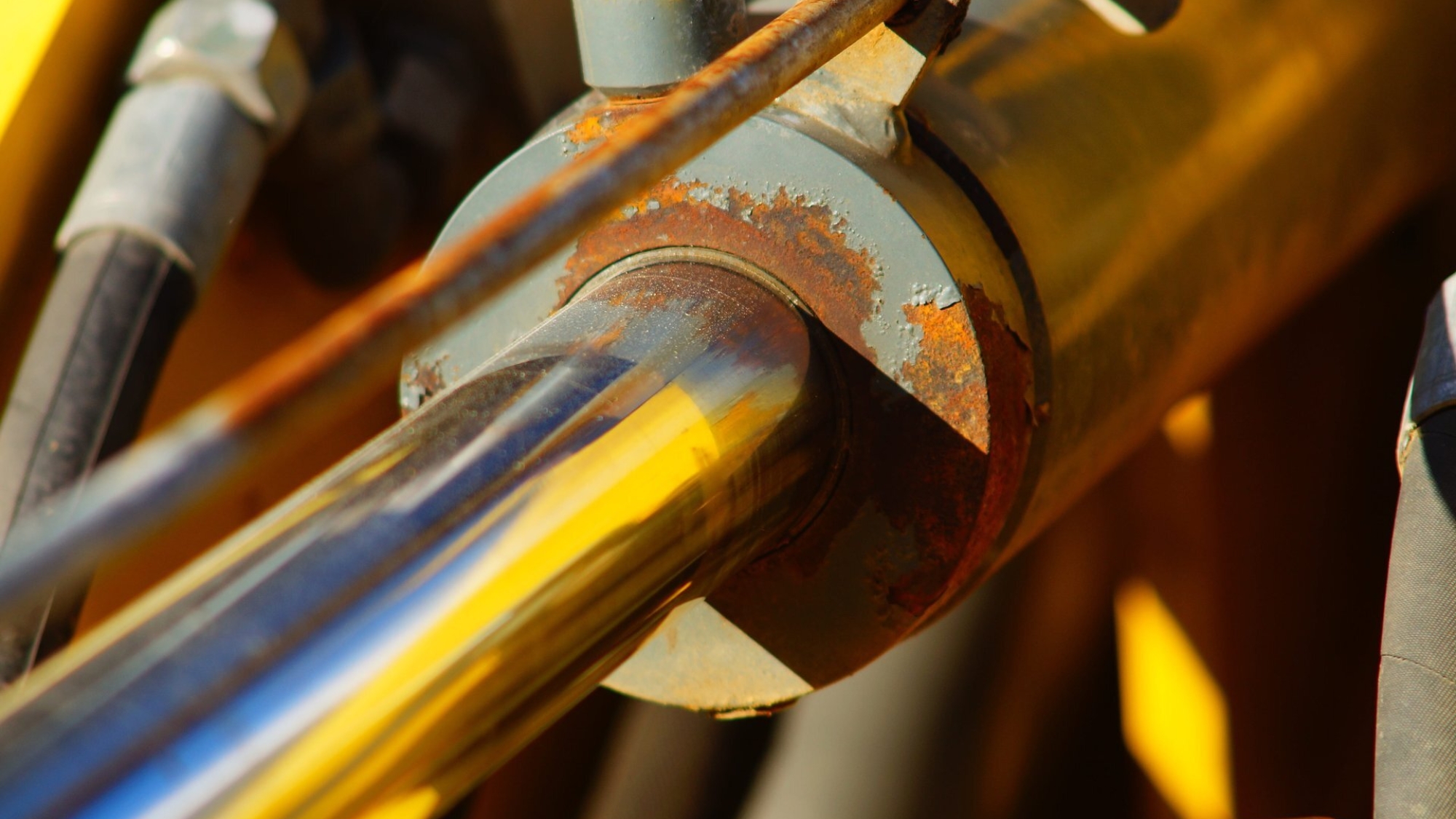
Hydraulic Cylinder Clevis: Mounting Configurations for Demanding Applications
The hydraulic cylinder is only as reliable as its connection to the equipment it powers. A cylinder that generates thousands of pounds of force must transfer that force securely into the machine structure — and the mounting configuration determines how well that happens. For applications involving angular movement, pivoting equipment, or articulating structures, the hydraulic cylinder clevis mount is the connection that makes it all work.
At Carlson Hydraulics, we’ve been manufacturing welded hydraulic cylinders and clevis components in Wichita, Kansas since 1953. Every clevis we produce — welded or threaded, cap end or rod end — is machined, fabricated, and welded in-house to meet the stringent demands of real-world hydraulic applications.
What Is a Hydraulic Cylinder Clevis Mount?
A hydraulic cylinder clevis is a forked mounting component that attaches to a cylinder and connects to the equipment structure through a clevis pin. The pin passes through both the clevis fork and the mating bracket on the machine, creating a pivoting joint that allows the cylinder to swing through an arc as the equipment moves.
This pivoting capability is what sets clevis mounts apart from fixed mounting styles like flange or foot mounts. When a cylinder extends and retracts while the equipment it’s attached to articulates — a loader arm raising, an excavator bucket curling, an agricultural implement adjusting — the clevis mount accommodates that angular movement without binding or placing damaging side loads on the cylinder rod.
Clevis mounts appear at both ends of a hydraulic cylinder depending on the application. The cap end clevis attaches at the base of the cylinder body, while the rod clevis mounts to the end of the cylinder rod. Many applications use clevis connections at both ends, allowing the entire cylinder to pivot freely as the machine moves through its range of motion.
Cap End vs. Rod End Clevis Configurations
The cap end clevis — sometimes called the base end or rear clevis — mounts to the closed end of the cylinder body. This is where the cylinder anchors to the machine frame or structure. In heavy equipment like excavators and loaders, the cap end clevis bears the full reaction force when the cylinder extends, making robust weld quality and material specification critical at this connection point.
The rod clevis end, by contrast, mounts directly to the cylinder rod and connects to the load — the implement, arm, or component the cylinder is actually moving. Because the rod clevis travels with the rod through every extension and retraction cycle, it must maintain precise alignment with the bore centerline. Any deviation creates uneven loading on the rod seals, accelerating wear and shortening cylinder service life.
Carlson manufactures both cap end and rod clevis end components to order, in configurations sized to match your cylinder bore, rod diameter, stroke, and load requirements.
Clevis Pin Specifications and Bore Requirements
The clevis pin is the physical link between the hydraulic cylinder and the machine, and its specification matters as much as the clevis itself. Pin diameter must be matched to the clevis bore and the mating bracket to distribute load properly. An undersized pin concentrates stress at the contact points; an oversized pin won’t fit the bracket or may restrict the angular range of motion the application requires.
Clevis bore dimensions in agricultural and mobile equipment applications often follow ASAE (American Society of Agricultural and Biological Engineers) standards, which define pin sizes and clevis dimensions for common equipment interfaces. This standardization simplifies replacement and ensures compatibility across equipment platforms. Carlson manufactures clevis components to both standard and custom bore specifications, including hard-to-find sizes that fall outside common catalog offerings.
Welded Clevis vs. Threaded Rod Clevis
Carlson offers two primary clevis configurations: welded and threaded. Each suits different application requirements, and selecting the right one depends on the operating environment, load characteristics, and whether the cylinder is a new build or a replacement for existing equipment.
When Welded Clevis Construction Is the Right Choice
A welded clevis is permanently attached to the cylinder during manufacturing. The clevis component is welded directly to the cylinder cap or rod end, creating a single integrated unit with no threaded interface that could loosen under vibration or shock loading. This makes welded clevis construction the preferred choice for heavy-duty applications — construction equipment, agricultural machinery, and industrial hydraulics where shock loads and continuous cycling are normal operating conditions.
Our CNC robotic welding process ensures consistent, full-penetration welds on every welded clevis cylinder we produce. The same precision weld quality that defines our welded hydraulic cylinder bodies extends to every clevis attachment, giving you a secure, structurally sound connection rated to handle the pressure demands of the application. Welded clevis cylinders are available across a wide range of bore sizes and stroke lengths to match your exact specifications.
For applications running at elevated pressure — up to 5000 PSI in severe-duty configurations — welded construction at the clevis is particularly important. The continuous stress cycling at high pressure demands a connection that won’t fatigue or work loose over time.
Stroke and Bore Specifications for Clevis Cylinders
Selecting the right clevis cylinder for your application starts with bore and stroke. Bore diameter determines force output — a larger bore generates more force at a given pressure. Stroke length defines how far the rod travels, which must be matched to the range of motion required by the equipment without creating rod stability issues at full extension.
For clevis-mounted cylinders specifically, stroke selection also affects the angular geometry of the mount. A cylinder with a long stroke swings through a wider arc as it extends, which means the mounting bracket positions and pin bore alignment must account for the full range of motion. Getting these specifications right at the design stage prevents binding, side loading, and premature component wear.
Carlson manufactures clevis hydraulic cylinders starting at 1.5-inch bore and across a full range of stroke lengths. Whether your application needs a compact cylinder for a tight envelope or an extended stroke for maximum reach, our team builds to your specification.
Clevis Cylinder Applications Across Industries
The hydraulic cylinder clevis mount appears across virtually every industry that relies on mobile hydraulics and articulating equipment. Its combination of load capacity and angular flexibility makes it the standard mounting solution wherever equipment components move relative to one another.
Construction and Heavy Equipment
Construction equipment depends on clevis-mounted cylinders for the core functions that define the machines. Excavator arm and bucket cylinders use clevis connections at both ends, allowing the boom, stick, and bucket to articulate through their full working range. Loader cylinders on wheel loaders and skid steers cycle continuously through lift and dump operations, with clevis mounts at cap and rod end absorbing the shock of repeated loading.
These cylinders operate in demanding conditions — hard ground impacts, continuous cycling, dust and debris, and temperature extremes. The clevis mount must maintain its secure connection through all of it. Welded clevis construction with full-penetration welds handles the shock loading that construction applications routinely generate, making it the standard specification for heavy equipment cylinders.
Agriculture and Mobile Machinery
Modern agriculture relies heavily on hydraulic cylinder clevis configurations for implement control and equipment positioning. Tractor front-end loader cylinders use clevis mounts to handle the continuous lift, carry, and dump cycles of feeding and material handling operations. Harvesting equipment uses clevis-mounted cylinders to position headers and adjust settings through long operating days where reliability is critical.
Many agricultural equipment platforms follow ASAE dimension standards for clevis pins and bores, simplifying cylinder replacement and parts sourcing. Carlson manufactures clevis cylinders to these standard specifications as well as custom dimensions for equipment that falls outside standard sizing. The operating environment in agriculture — exposure to dust, moisture, fertilizers, and field debris — makes seal package and rod specification as important as the clevis mount itself. Our cylinders are built with superior seal packages designed to hold up in these conditions.
Industrial and Material Handling
Industrial hydraulic applications use double-acting cylinder designs with clevis mounts wherever the actuator must pivot during operation. Material handling equipment — dumpers, tilters, positioners — uses clevis-mounted cylinders to move loads through controlled angular paths. Fabricating equipment and custom machinery in manufacturing environments often require clevis cylinders with non-standard bore and stroke combinations that fall outside catalog offerings.
For industrial applications, the clevis mount provides positional flexibility that rigid mounting styles can’t match. When the load path changes direction through the stroke, a clevis connection accommodates the geometry without transferring damaging bending loads into the cylinder rod or bore.
Custom Clevis Hydraulic Cylinders from Carlson Hydraulics
Standard catalog clevis cylinders cover many common applications, but demanding equipment often needs something that standard products can’t provide. Non-standard bore sizes, unusual stroke lengths, specialized rod materials, or unique clevis dimensions for specific equipment interfaces all require custom manufacturing. This is where Carlson’s in-house capabilities make the difference.
All clevis components—including welded clevis cylinder ends, threaded rod clevis mounts, pin-eye assemblies—are produced within our Wichita facility. Depending on application requirements and cost targets, these components are manufactured through in-house machining and fabrication, configured from ball-joint rod ends, castings that are drilled, bored, and finished to customer-specified dimensions, or assembled using pre-formed strap clevises to reduce machining time and overall cylinder cost.
Clevis components are designed and integrated as part of the cylinder assembly rather than attached as off-the-shelf items. This approach allows clevis geometry, pin bore diameter and alignment, material thickness, and weld placement to be optimized for the specific load case, stroke, and mounting configuration of the cylinder. The result is a controlled interface between the clevis and cylinder tube that promotes proper load transfer, consistent fit-up, and repeatable performance across production.
Custom clevis cylinders go through the same rigorous testing protocol as all Carlson products. Each cylinder is tested with hydraulic fluid on our test bench, pressurized to its rated working pressure, and cycled through full extension and retraction before shipment. Every cylinder is tested individually — not sampled from a production run — so you know the specific unit you receive has been verified against its specification.
Built to Your Specifications in Wichita, Kansas
USA-made manufacturing at Carlson means direct access to our team throughout the build process. If your application has unusual requirements — a specific clevis pin bore that matches legacy equipment, a stroke length that pushes the rod stability limits and needs a larger rod diameter, a pressure rating that requires upgraded wall thickness — those details get worked out before manufacturing begins, not discovered after delivery.
Our manufacturing capabilities include CNC robotic welding and CNC turning centers for precision machining and finishing. This combination of equipment supports clevis cylinder production across the full range of bore sizes and pressure ratings offered by Carlson Hydraulics—from standard 2,500 PSI hydraulic cylinders to severe-duty applications rated up to 5,000 PSI.
In addition, cylinder configurations can be tailored through seal selection to accommodate lower-pressure applications, with operating pressures adjustable down to 250 PSI when required.
Lead times for custom clevis cylinders typically run 4 to 10 weeks depending on complexity and order volume — faster than sourcing from overseas suppliers and with none of the freight delay or specification uncertainty that comes with distant manufacturing.
Clevis Mount Cylinder Warranty and Lead Times
All Carlson welded hydraulic cylinders, including clevis cylinder configurations, are backed by our 2-year limited warranty covering manufacturing defects, weld leaks, and seal failure. The warranty reflects our confidence in the manufacturing process and the in-house quality control that every cylinder goes through before it leaves Wichita.
For cylinder repairs involving clevis components — worn pin bores, damaged clevis forks, rod end replacement — Carlson’s repair services address the full cylinder assembly. We stock seal kits and components across a wide range of cylinder sizes, and our repair capabilities extend to cylinders from other manufacturers as well as our own.
When your equipment depends on reliable hydraulic power through every work cycle, the clevis mount is one of the connections that can’t afford to fail. Carlson builds them to last.
Ready to discuss your clevis cylinder requirements? Contact Carlson Hydraulics for a quote on custom welded clevis cylinders, threaded rod clevis mounts, or replacement components for your hydraulic system. Our team is ready to help you find the right configuration for your application.