

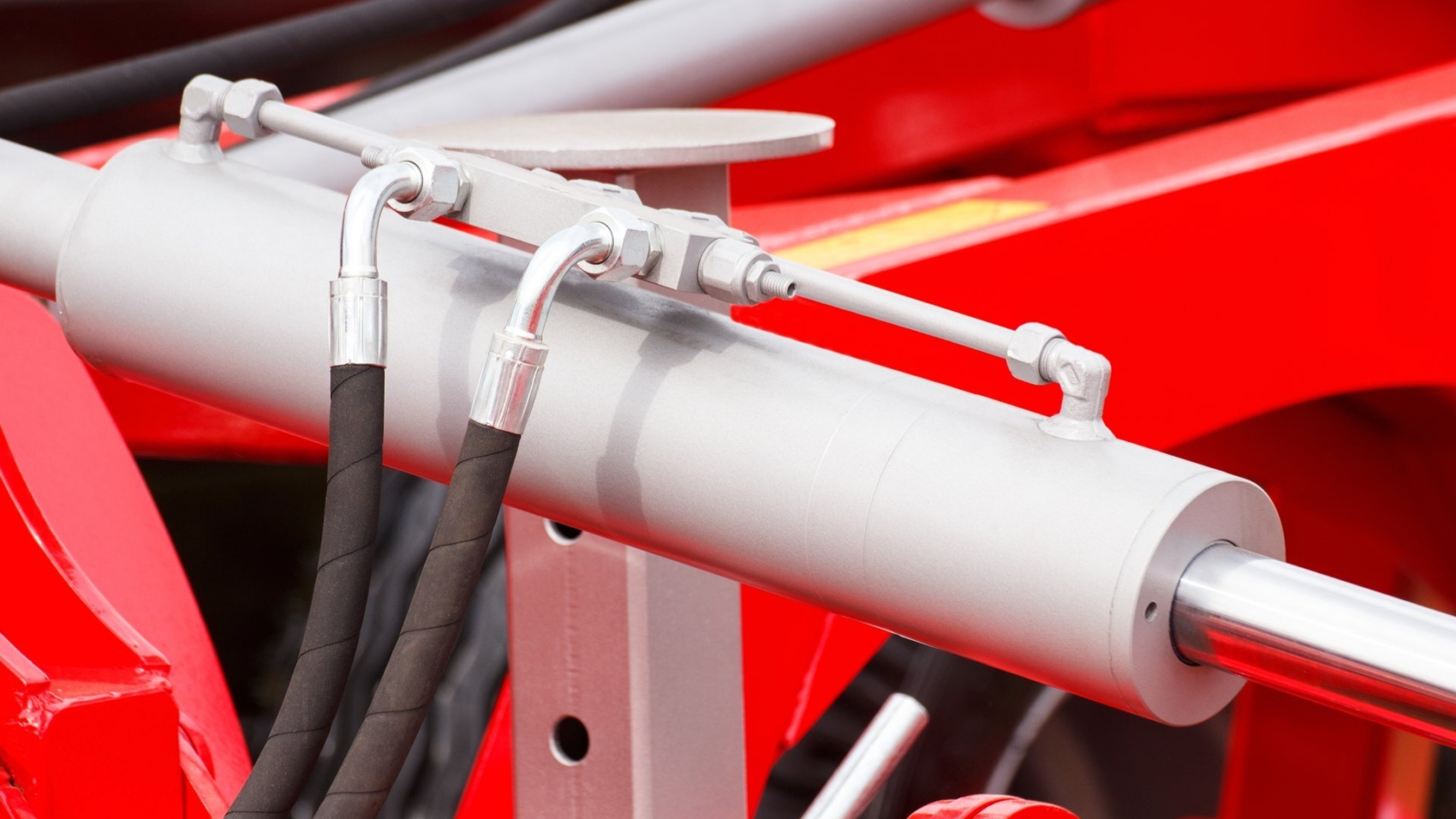
Hydraulic Cylinder Components: Parts, Function, and Repair Basics
A hydraulic cylinder looks simple from the outside. It’s a tube with a rod that extends and retracts. Inside, though, a hydraulic cylinder component system relies on precise coordination between several parts, each doing a specific job under pressure. Understanding what those parts are and how they work together makes it easier to diagnose problems, order the right replacement components, and have an informed conversation with whoever repairs or manufactures your cylinders.
At Carlson Hydraulics, we’ve manufactured welded hydraulic cylinders and their components in Wichita, Kansas, since 1953. This guide breaks down the essential parts of a hydraulic cylinder, what each one does, and the basics of when a component needs attention.
What Are the Main Components of a Hydraulic Cylinder?
A hydraulic cylinder is built from several component parts that work together to convert hydraulic fluid pressure into linear motion. While designs vary by application, most hydraulic cylinders share the same core components.
Cylinder Barrel
The cylinder barrel is the outer tube that houses the piston and contains hydraulic fluid under pressure. The barrel’s internal surface is honed to a precise diameter, since even small imperfections can damage seals as the piston moves. A properly honed barrel allows the piston to travel smoothly along its full stroke without excess friction or premature seal wear.
Barrel wall thickness matters directly to pressure capability. A barrel built for standard operating pressure will not hold up under a demanding, high-pressure application, which is why bore diameter and wall thickness are specified together during manufacturing.
Piston and Piston Rod
The piston sits inside the barrel and divides it into two chambers. As hydraulic fluid enters one side of the piston, it generates the mechanical force that pushes the piston, and the attached piston rod, into motion. The piston rod extends through the cylinder head and connects to whatever the cylinder is moving, whether that’s an excavator bucket, a press plate, or a loader arm.
Rod diameter and surface finish affect both performance and longevity. A rod with a smooth, hardened surface resists wear and corrosion as it cycles in and out of the cylinder. Alignment between the rod and barrel is equally important. A rod that isn’t properly aligned creates uneven friction, which accelerates seal wear at the rod end.
Cylinder Head, Gland, and End Caps
The cylinder head, sometimes called the gland, is the component the piston rod passes through as it exits the barrel. The gland houses the primary rod seals and often a wiper seal, making it one of the most important components for keeping contamination out and hydraulic fluid in.
End caps seal the barrel at both ends and anchor the cylinder head and cylinder base to the barrel itself. Depending on the cylinder’s construction, end caps may be welded directly to the barrel or secured with tie rods and threaded nuts. Each approach suits different applications. Welded end caps create a single structural unit well suited to high-pressure, heavy-shock environments, while threaded and tie-rod configurations allow for easier disassembly during certain types of maintenance. Neither construction is universally better. The right choice depends on the application’s pressure demands and service requirements.
Seals and O-Rings
Seals are small components with an outsized effect on hydraulic cylinder reliability. Piston seals maintain the pressure differential across the piston as it moves through the barrel. Rod seals prevent hydraulic fluid from leaking out along the rod, while wiper seals keep dirt, dust, and moisture from being dragged into the cylinder as the rod retracts. O-rings provide static seals at ports and mating surfaces throughout the assembly.
Seal kits are typically sold as a set, since piston seals, rod seals, wiper seals, and o-rings tend to wear at similar rates and are most efficiently replaced together during a rebuild.
Ports, Rod Clevis, and Mounting Hardware
Ports are the entry and exit points for hydraulic fluid, positioned on the cap end and rod end of the cylinder to allow fluid in and out during extension and retraction. Port size and location need to match the connections on the rest of the hydraulic system.
The rod clevis and other mounting hardware determine how the cylinder attaches to the equipment it powers. A clevis mount allows the cylinder to pivot as equipment components move, which is common on articulated machinery. Other mounting configurations, such as flange or trunnion mounts, serve applications where the cylinder needs a more rigid or rotating connection. These accessories are chosen based on how the cylinder needs to move and transfer load within the larger machine.
How Hydraulic Cylinder Components Work Together
Each component plays a specific role, but a hydraulic cylinder only functions correctly when all of its parts operate in coordination. Hydraulic fluid enters through a port and pushes against the piston, generating force that travels through the piston rod to do work on the connected equipment. The barrel contains that pressure, the seals keep the fluid where it belongs, and the cylinder head and end caps hold the entire assembly together under repeated cycles of load and motion.
This coordination is why a single worn component can affect the performance of the whole cylinder. A worn rod seal allows fluid to leak past the rod, which reduces the pressure available to do work and eventually causes visible leakage. A damaged piston seal allows fluid to bypass internally between chambers, which shows up as reduced force output or a cylinder that drifts under load even when it should be holding position. Reliable operation depends on every component doing its job, not just the major ones.
Industrial and mobile equipment place different demands on these components. A hydraulic press cylinder cycles frequently under high load but in a relatively controlled environment. A construction equipment cylinder faces dust, shock loads, and temperature swings in addition to high cycle counts. Component selection, particularly seal material and rod coating, should reflect the demands of the actual application.
Common Wear Points and When to Repair a Component
Certain hydraulic cylinder components wear faster than others simply because of how much stress they absorb during normal operation. Understanding these common wear points helps identify problems early, before a minor issue becomes a costly repair or an unplanned equipment failure.
Seal Wear and Rod Scoring
Seals are consumable components. Piston seals and rod seals wear gradually through normal cycling, but contamination accelerates that wear significantly. Dirt and debris that get past a worn wiper seal can score the rod surface, and once a rod is scored, it will continue damaging new seals even after a repair, since the seal has nothing smooth to seal against. This is why rod condition is checked closely any time seals are replaced.
Alignment issues also show up as uneven wear. A rod that isn’t traveling perfectly straight through the gland creates friction on one side of the seal, wearing it unevenly and shortening its service life compared to a properly aligned cylinder.
Signs a Component Needs Attention
A few signs typically indicate that a hydraulic cylinder component needs repair or replacement. Visible fluid leakage at the rod end usually points to a worn rod seal. Leakage at a port or fitting often traces back to a worn o-ring. A cylinder that loses position under a static load, sometimes called cylinder drift, often indicates internal bypass at the piston seal. Unusual noise or resistance during operation can point to alignment problems or barrel damage.
Catching these signs early keeps a repair limited to the affected component rather than letting damage spread to the barrel or rod itself. A cylinder brought in for seal replacement is a straightforward repair. The same cylinder run for months with a scored rod may need rod replacement or barrel honing in addition to new seals, turning a simple job into a larger one.
Aftermarket vs Custom Hydraulic Cylinder Components
When a component needs replacement, buyers generally choose between aftermarket parts and custom-manufactured components. Aftermarket components are typically produced to fit common cylinder dimensions across a range of brands, which works well for standard applications where an exact original match isn’t essential.
Custom components become necessary when a cylinder uses a non-standard bore, rod diameter, or mounting configuration, or when the original manufacturer’s parts are no longer available. At Carlson, we manufacture custom rods, pistons, cylinder barrels, and end caps in-house, which allows us to match dimensions precisely rather than fitting a customer’s equipment to whatever aftermarket sizes happen to be available. This capability is especially useful for older or hard-to-find hydraulic cylinders where standard aftermarket components simply don’t exist. You can read more about our approach to building components to exact specifications in Custom Hydraulic Cylinders: Precision Manufacturer for Your Custom Cylinder.
What to Look For When Choosing Quality Components
Component quality directly affects hydraulic cylinder reliability, so it’s worth understanding what separates a well-made component from a lower-quality one. Barrel honing quality affects seal life and friction throughout the cylinder’s service life. Rod surface treatment, whether hard chrome plating or another coating, affects corrosion resistance and wear. Seal material should match the application’s fluid type, temperature range, and contamination exposure, since a seal designed for one operating environment may fail quickly in another.
Thread quality on end caps and mounting hardware also matters more than it might seem. Poorly cut threads can loosen under vibration or cross-thread during assembly, creating leak points or mounting failures down the line. For demanding industrial applications, these details make the difference between a component that performs reliably for years and one that requires early replacement.
Hydraulic Cylinder Component Repair at Carlson
Carlson Hydraulics manufactures hydraulic cylinder components in-house at our Wichita, Kansas facility, including rods, pistons, cylinder barrels, end caps, and seal packages. We also offer repair services for existing cylinders, using the same manufacturing capability behind our new component production to identify worn parts and rebuild cylinders correctly. Our welded hydraulic cylinders are built with this same component-level precision from the start, which is part of why they hold up under demanding, repeated use.
Whether you need a replacement seal kit, a custom rod for an older cylinder, or a full component rebuild, understanding your cylinder’s parts and how they function is the first step toward the right solution.
Contact Us
If you’re troubleshooting a hydraulic cylinder issue or need replacement components for an existing system, our team can help identify what’s needed and provide a lead time estimate. Contact us to discuss your hydraulic cylinder component needs.